
How to Choose Who Builds Your Church’s Website
If your congregation has decided it’s time for a new website, you’re about to have a handful of conversations with people who all sound reasonably convincing.
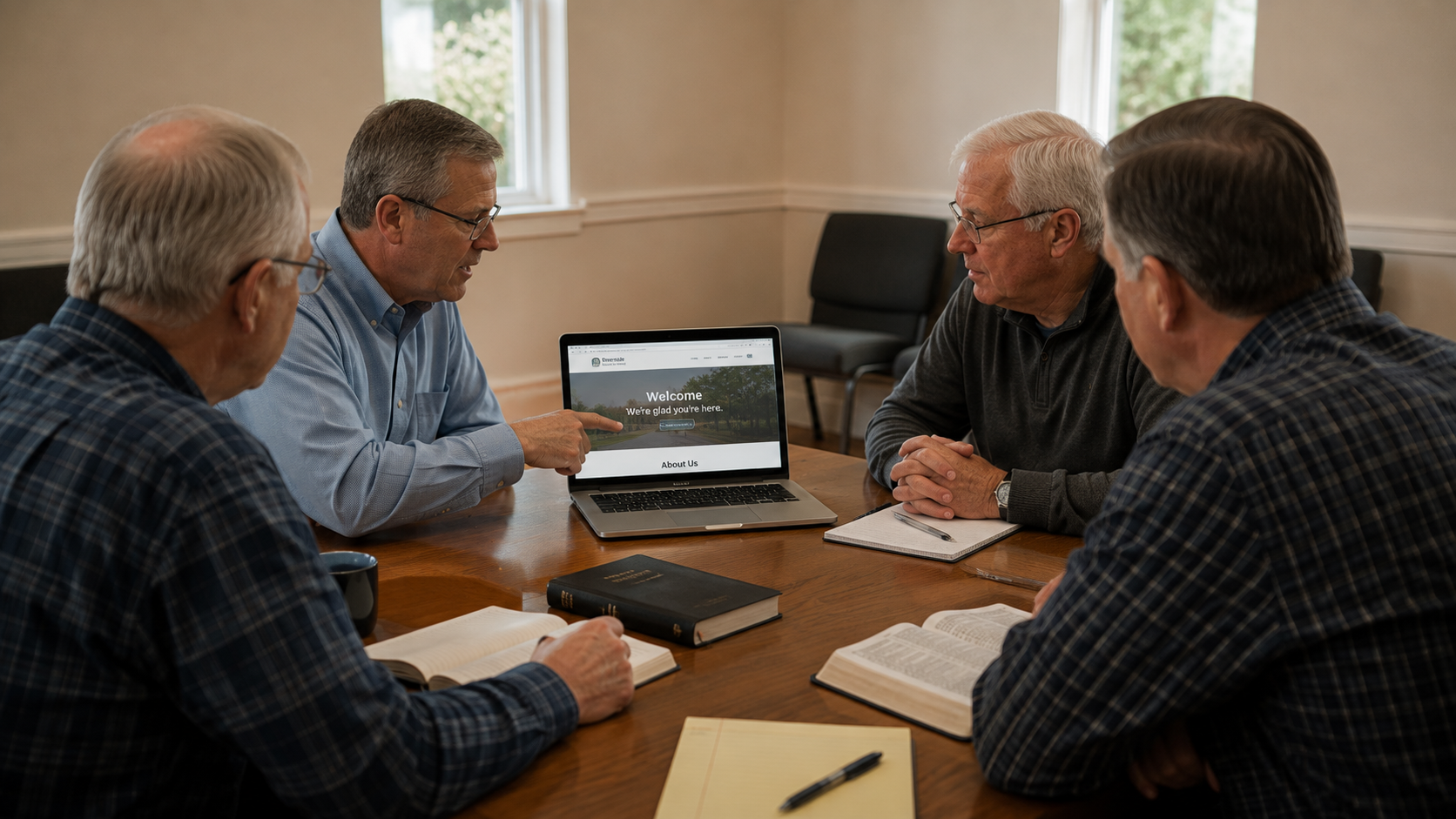
If your congregation has decided it’s time for a new website, you’re about to have a handful of conversations with people who all sound reasonably convincing. Comparing them is genuinely hard when you don’t build websites for a living, and the wrong choice can cost you a couple of years and a fair amount of the Lord’s money.
We build church websites, so we have an obvious interest here. We’re going to set that aside as best we can and give you the questions we’d want an elder to ask, including the ones that are uncomfortable for us to answer. If another provider serves your congregation better, you should choose them.
Ask Who Actually Owns It When You Leave
This is the single most important question, and the one most churches don’t think to ask until it’s too late.
Some providers build your site on a platform you can’t take with you. If you ever decide to leave, you don’t get the website. You start over from nothing, having paid for years. Others build on something standard and portable, where the site and the content are genuinely yours and can be moved to another provider or another host.
So ask directly: if we part ways in three years, what exactly do we walk away with? A provider who answers that plainly and without flinching is telling you something good about how they operate. A vague answer is your warning.
Ask What It’s Actually For
Church websites tend to fall into two very different categories, and the difference matters more than how it looks.
One kind is a brochure for the people who already attend. Service times, a calendar, a note from the preacher, an events page. Useful, but essentially an internal bulletin board.
The other kind is built to reach the person who doesn’t know you yet. It speaks plainly to a searching soul, answers the questions that keep a nervous visitor home, teaches what you believe in language an outsider can follow, and makes it easy and unintimidating to take a first step.
Both are legitimate, but you should know which one you’re buying. Ask a prospective provider to walk you through how their site serves a stranger who has never attended anywhere. If they can only talk about features and colors, they’re building you a brochure.
Ask Whether They Understand Your Congregation
This one matters a great deal for churches of Christ, and it’s worth being direct about.
A provider who works with all kinds of religious organizations may not understand what you teach or how you speak, and it shows up in small, grating ways: assumptions about how you worship, language that doesn’t fit, imagery that isn’t yours. You end up spending your time correcting a stranger’s guesses.
Ask who else they’ve worked with and whether they understand what makes your congregation distinct. You don’t necessarily have to work with brethren, but you do need someone willing to learn it and get it right.
Ask What Happens After Launch
A website is not a one-time purchase, and the months after launch are where a lot of churches get burned.
Find out who updates it when something changes, how quickly they respond when something breaks, whether a volunteer can make simple edits without needing a developer, and what the ongoing costs really are. Then ask the most revealing question of all: when we call with a problem, who answers? A real person who knows your church, or a ticket queue? Being able to reach someone who cares is worth more than a longer feature list.
Watch for These Warning Signs
A few things should give you pause, regardless of who you’re talking to.
- Be wary of pressure and urgency, of any pitch that needs you to decide today.
- Be wary of a provider who won’t give you straight pricing until you’ve sat through several calls.
- Be wary of anyone who promises dramatic results quickly, because this work is slow and honest people say so.
- And be wary of long contracts with no way out, since a provider confident in their work doesn’t need to trap you.
What We’d Tell You If You Called Us
For the sake of honesty, here’s where we land on our own answers. We build on a standard, portable platform, so your site is yours. We build evangelistically, for the searching stranger, not as a brochure. We work exclusively with churches of Christ, so we already speak your language. We’re open about pricing, we don’t use long contracts, and when you call, you get one of the few of us who will know your congregation by name.
And if a different provider fits your situation better, we’ll tell you. We’ve done it before.
However you decide, take these questions into every conversation you have. A church website is a tool you’ll live with for years, and asking hard questions up front is simply good stewardship. Choose carefully, choose people you can actually reach, and choose something built for the souls you’re trying to reach rather than only for the folks already sitting with you.
Ready to Ask the Right Questions?
Project Go builds evangelistic websites exclusively for churches of Christ, on a platform you own, with transparent pricing. Book a call and ask us the hard questions.
Book a Free Discovery Call