
Church & Culture
Is Social Media Appropriate for Churches? A Biblical and Practical Perspective
It’s a fair question — and it deserves a thoughtful, honest answer. Not a dismissal, and not a pep talk. Let’s actually think through this together.
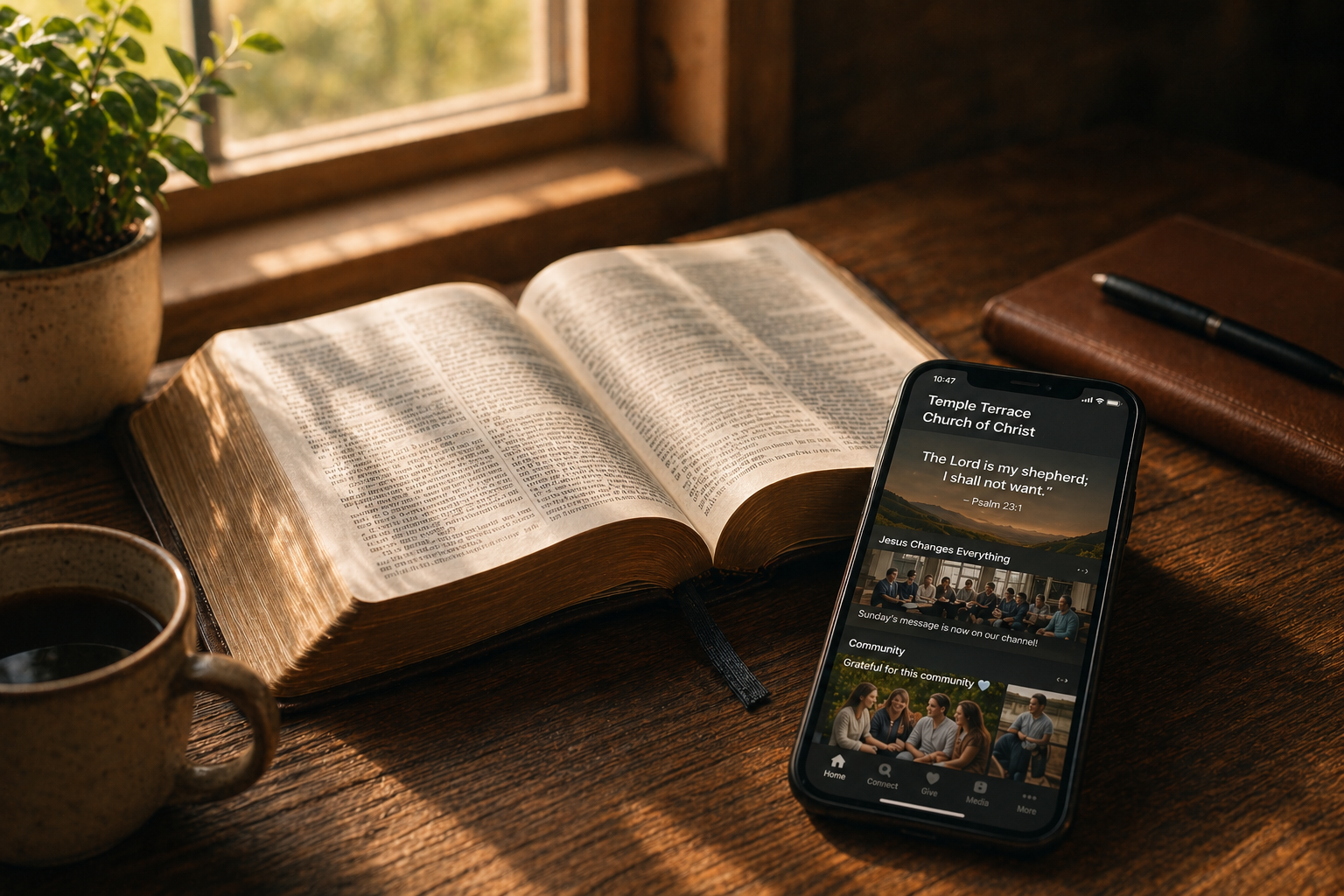
If you’ve raised this question in a business meeting lately, you’ve probably seen the room split. Some members think it’s obvious — of course the church should be on Facebook. Others squirm. They’re not sure it’s appropriate, or they’ve seen it done poorly, or they worry about the message it sends. Both responses are worth taking seriously.
This isn’t a post designed to talk you into something. It’s designed to help you think through something — carefully, scripturally, and practically — so your congregation can make a wise decision together. Let’s start with the real concerns.The Concerns Are Legitimate
Churches of Christ have always been serious about the distinction between the church and the world. That’s not a weakness — it’s a strength. So when brothers and sisters hesitate about social media, they’re often coming from one of these genuinely thoughtful places:“Social media is full of worldly content.”
That’s true. Facebook, Instagram, and YouTube carry enormous amounts of content that no Christian should consume. But the presence of sinful content on a platform doesn’t make the platform itself sinful to use. Roads carry drunk drivers. We still drive to worship.
“We’ll look like we’re chasing trends.”
This one is worth sitting with. There’s a real difference between using a tool for evangelistic purposes and adopting the vanity and performance culture that drives social media. The question isn’t whether to use it — it’s how. A church that uses Instagram to share scripture and invite people to worship looks nothing like an influencer chasing likes.
“It creates division — members argue in the comments.”
This happens, and it’s ugly when it does. But it’s a management issue, not a medium issue. A social media presence for outreach doesn’t need to be a debate forum. Focused, purposeful use with clear boundaries prevents most of this.
“We don’t have anyone to run it.”
This is the most practical objection — and the most honest. Social media done poorly is worse than none at all. If your congregation doesn’t have a committed person or team to manage it consistently, that’s a real constraint to plan around — not just dismiss.
What Scripture Actually Says About This
The Bible doesn’t mention social media, obviously. But it speaks directly to the principles involved — and those principles lead somewhere.“Go into all the world” (Mark 16:15)
The Great Commission has no geographic or technological boundaries. “All the world” in 2026 includes the digital world, where billions of people spend hours every day. If we believe the command to go is still active — and we do — then we have to ask where people actually are. And they’re online.“I have become all things to all people” (1 Cor. 9:22)
Paul didn’t adopt the sins of the cultures he entered. He adopted their communication methods. He spoke Greek in Athens, Hebrew in Jerusalem, and reasoned in the philosophical frameworks his audiences understood. Using Instagram to reach a millennial in 2026 is a modern expression of the same principle.“Let your light shine before others” (Matt. 5:16)
A light hidden where no one can see it isn’t serving its purpose. If your congregation has a genuine, loving, biblical community — and it does — there is nothing ungodly about letting people see it. Social media, used faithfully, is a window into the life of the church.
“Look carefully then how you walk, not as unwise but as wise, making the best use of the time, because the days are evil.”
Ephesians 5:15–16
Paul urged believers to make the most of every opportunity. In a world where your community is spending hours on social media, not having a presence there isn’t neutrality — it’s an opportunity left unredeemed.
Our perspective at Project Go
We’ve worked alongside preachers, elders, and evangelists across the brotherhood on this exact question. The ones who’ve seen real fruit from social media share one thing in common: they use it to serve their community and point to Christ — never to perform or self-promote.
What Faithful Church Social Media Actually Looks Like
Faithful church social media for a Church of Christ doesn’t look like a megachurch hype reel or a motivational speaker’s feed. It looks like this:Scripture-centered
Every post either teaches, encourages, or invites — and it’s rooted in the word of God, not cultural commentary.
Genuinely warm
Photos of real people in real moments — Bible class, fellowship, baptisms (with permission) — show a living, loving congregation.
Outward-facing
Content is designed with the outsider in mind — the person who is curious, searching, or hesitant about church.
Consistent, not viral
Showing up faithfully every week matters more than going viral once. Steady presence builds trust over time.
Who’s Actually Watching?
This might be the most important reframe: when your church posts on social media, who’s in the audience?- The visitor who came last Sunday and is still deciding whether to come back — your posts keep the relationship warm
- The prodigal who grew up in the church and unfollowed God but still follows you — because you were kind to them once
- The person going through a divorce who searched “church of Christ” at 11pm and found your Facebook page
- The military family that just moved to your city and is trying to find a faithful congregation before Sunday
- The college student wrestling with faith, watching what real Christians actually look like online
“Project-Go has been an invaluable resource for our church as we seek to engage in more digital outreach. They have helped us redesign our entire website and have helped us fully invest in our social media presence. Their expertise, professionalism, and experience enabled us to do things we simply could not have done otherwise.”
JB
Jonathan Banning
Evangelist, Temple Terrace Church of Christ
A Framework for Deciding What to Post
If your congregation decides to move forward with social media, here’s a simple filter to run every post through before publishing:- Does it glorify God or the congregation? If it’s more about how great you look than about the gospel, rethink it.
- Would a visitor feel welcomed by this? Insider jokes and references only members would understand have no place in public posts.
- Is it consistent with how you want to be known? Your social media creates an expectation. Make sure Sunday morning lives up to it.
- Is it something Jesus would find worth sharing? A simple but powerful gut check for every single post.