
The Searches People Make at 2 a.m.
Late at night, when the house is quiet and the distractions are gone, people type the questions they’ve been carrying all day. A faithful church can be there with a true word when they do.
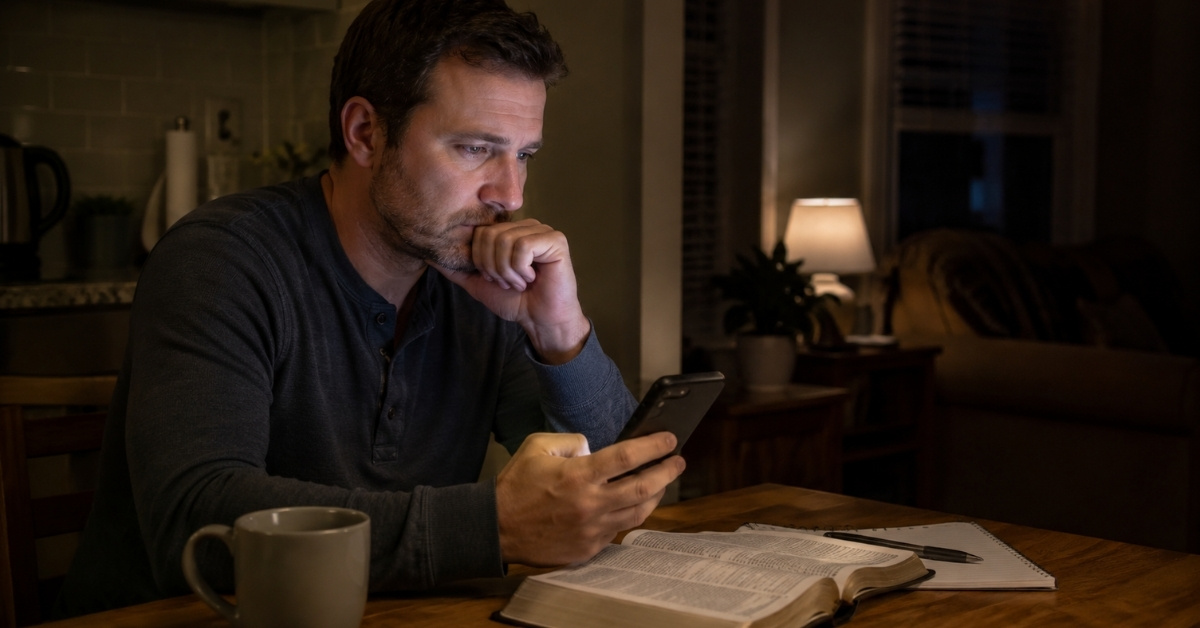
There’s a kind of searching that only happens late at night. It’s the hour when the house is quiet and the distractions are gone, and a person finally types the question they’ve been carrying all day. “Does God hear me?” “Is it too late for someone like me?” “How do I stop feeling so empty?” “What happens when we die?”
Nobody asks these out loud at lunch. They feel too raw, too revealing. But alone, in the dark, with a phone in hand and no one watching, people ask them all the time. And wherever those questions get typed, something answers. The only question is what.
For the church, this is one of the most overlooked moments in all of outreach. Because the searching soul is reaching out. They’re just reaching out in a place we haven’t always thought to be.
The Honest, Aching Questions Are Being Typed Somewhere
We tend to picture evangelism as a conversation — two people, a Bible open between them. And that conversation is precious. But before most people are ready for it, there’s a quieter, lonelier stage. They’re not ready to talk to a person yet. They’re testing the water privately, the way you’d touch a hot stove before committing your hand to it.
In that stage, they search. And what they’re searching for is rarely a service time. It’s meaning. It’s hope. It’s some sign that the ache they feel has an answer — and that the answer might be for them.
Now ask the uncomfortable question. When a hurting person in your own town types one of those midnight questions, does anything from a faithful church ever come up? Or do they only find noise, opinions, and voices that point them everywhere except to Jesus?
Being Present for the Question Behind the Question
This is where a church can love its neighbors in a way that simply wasn’t possible a generation ago.
When you take the real questions people carry and answer them plainly — with Scripture and with compassion — you put a light in a place that’s usually dark. A short, honest piece of writing about grief, or doubt, or guilt, or whether God could possibly want someone back, can reach a person in the exact moment they’re brave enough to ask. You’ll likely never see it happen. You may never know their name this side of heaven. But you were there, with a true word, when they reached out into the dark.
This is the heart behind everything Jesus did. He answered the question behind the question. The woman at the well came for water and left having met the Messiah. He started where she was, with what she was actually carrying, and walked her toward living water. Meeting people in their honest, aching questions is the same work — simply carried into a new place.
You Don’t Have to Have a Studio or a Strategy to Start
It’s easy to assume this requires a budget, a team, or skills your congregation doesn’t have. It doesn’t.
It starts with listening. What do people in your community actually wrestle with? What did you wrestle with before you came to Christ? Those are the questions worth answering — in plain words, from a heart that remembers what searching felt like. One faithful, compassionate answer placed where a hurting person can find it is worth more than a hundred polished posts that say nothing.
The fields are white for harvest, and some of that harvest is awake right now, phone in hand, asking the bravest question they know how to ask. They won’t raise their hand. They won’t call the building. But they are reaching out.
May they find more than noise when they do. May they find a word of hope, and the One it points to.