
Church Outreach
Why Door-to-Door and Mailers No Longer Work — And What to Do Instead
Traditional outreach methods served the church faithfully for decades. But the world changed. Here’s an honest look at why — and a practical path forward.
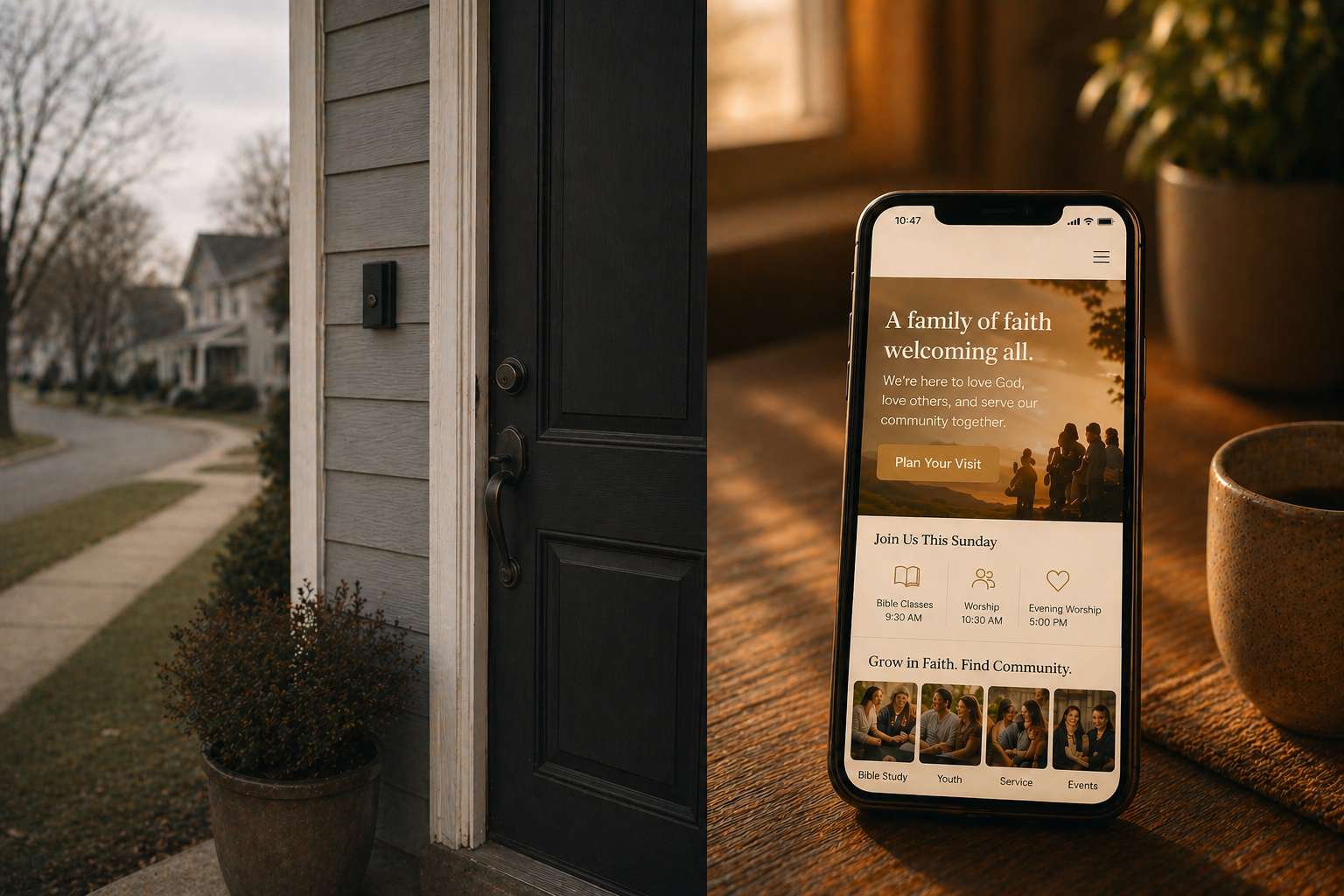
Let’s be honest with each other. If you’ve knocked doors recently, you know the feeling. The polite “no thanks.” The house where no one answers but you can hear the TV. The neighborhood where half the homes have “No Soliciting” signs. Door-to-door worked beautifully in 1975. In 2026, it’s a different story.
This isn’t a criticism of the brothers and sisters who faithfully went door to door for years. That effort was sincere, sacrificial, and bore real fruit in its time. This is just an honest conversation about the world we live in now — and what it means for fulfilling the Great Commission today. If your congregation is wondering why outreach feels harder than it used to, this post is for you.What Changed (And Why It Matters)
The shift didn’t happen overnight. It was gradual. But a few major cultural and behavioral changes have fundamentally altered how people respond to outreach:1. People Don’t Trust Strangers at Their Door Anymore
Cultural anxiety has risen sharply over the past two decades. Ring doorbells, neighborhood watch apps, and general wariness of unsolicited visitors have made door-to-door outreach feel intrusive to most people — even when it’s done with genuine love and a warm smile.2. Mailers Disappear in the Noise
The average American receives 16 pieces of physical mail per week — and treats most of it as junk. A church postcard competes with pizza coupons, car dealership flyers, and political ads. The open rate for direct mail has fallen below 5% in most demographics. That’s 95 out of 100 people who never even read what you sent.3. People Research Before They Visit
Even if someone is spiritually curious, their first step is almost never driving by to check out a church. Their first step is searching online. If they can’t find you, or if your website doesn’t give them a reason to come, they move on.<5%
Average open rate for church direct mail
3M+
Monthly Google searches for “churches near me”
70%
First-time visitors check a church’s website first
The “We’ve Always Done It This Way” Trap
There’s a temptation in any healthy church to equate method with faithfulness. If we stop doing what we’ve always done, are we compromising? Are we chasing trends? Here’s the distinction that matters: the mission hasn’t changed, but the method should.
“I have become all things to all people, that by all means I might save some.”
1 Corinthians 9:22
Paul adapted his approach for the synagogue crowd, the Athenian philosophers, and the Gentile communities he planted churches in. The gospel was constant. The approach was contextual. Continuing to invest time and money in outreach methods with a 95% failure rate isn’t faithfulness — it’s frustration. And the souls you’re not reaching deserve better.
Something worth sitting with
We love the principle of redeeming the time (Ephesians 5:16) when it comes to personal productivity. But do we apply it to outreach strategy? If a method isn’t producing fruit, stewardship asks us to honestly evaluate what would.
What Actually Works Now
The good news is that the opportunity for evangelism has never been greater. People are more spiritually curious than ever — they’re just looking in different places. Here’s where they are:Fading fast
- Door-to-door canvassing
- Direct mail postcards
- Newspaper ads
- Telephone campaigns
- Yellow Pages listings
Growing fast
- Google search (local SEO)
- Evangelistic church website
- Social media outreach
- Google & Facebook ads
- YouTube & video content
An Evangelistic Website
Your church website isn’t a bulletin board for members. It should be a front door for seekers. That means answering the questions a spiritually curious person actually asks: What do you believe? What should I expect when I visit? Are you friendly to someone who has never been to church? A website that answers those questions warmly and clearly converts curious visitors into first-time guests.Local Search Visibility
When someone in your city searches “churches near me” or “church of Christ in [your city],” your congregation needs to show up. Claiming your Google Business profile, keeping information accurate, and making sure your website clearly identifies who you are and where you are goes a long way.Consistent Social Media Presence
You don’t need to go viral. You just need to show up consistently with content that reflects the warmth, truth, and life of your congregation. A weekly scripture post, a highlight from Sunday’s sermon, a short video from Wednesday night class — these quietly build familiarity with your community over time.Targeted Digital Ads
For a few hundred dollars a month, you can put your church in front of thousands of people in your zip code who are actively searching for a church home. That’s something a mailer campaign could never do at that price point — and the targeting is far more precise.
“We’ve had a steady stream of visitors recently, at least partially due to all the promotional efforts. And we’ve had two baptisms which are the direct result of these digital evangelism efforts (plus a little follow-up on our part).”
MW
Mike Wilson
Evangelist, Santa Clara Church of Christ
This Isn’t About Abandoning Personal Evangelism
Let’s be clear: digital outreach doesn’t replace personal relationships. It creates them. The goal of every digital touchpoint — a website visit, a Google ad click, a Facebook post — is to lead a real person to a real relationship with a real congregation. Online outreach is the introduction. Personal evangelism is the conversation that follows. In many ways, digital tools let your members do more personal evangelism, not less. Instead of cold-knocking on a stranger’s door, your members can invite friends and neighbors to a church they can already look up online, read about, and feel comfortable visiting.A Practical First Step
If your congregation is still relying primarily on traditional outreach methods, you don’t have to overhaul everything overnight. Start here:- Google your church right now. What comes up? Is it accurate? Is it welcoming? Does it have photos? This is how your community sees you.
- Visit your church website as a stranger. Could someone who knows nothing about you figure out who you are, what you believe, and how to visit — in under 60 seconds?
- Ask your members how they found you. You might be surprised how many came from an online search, not a mailer or a door knock.